
Picture a year where your body feels a little more energized, your mind feels a little clearer, and your schedule actually makes room for you. That kind of healthy year is not about perfection or pressure. It’s about small, intentional choices that add up over time. And when you stack those choices year after year, you’re not just creating a better year, you’re building a healthier life.
A health and wellness checklist helps you do exactly that. Instead of guessing what to focus on or waiting until something feels off, the checklist provides a simple plan to follow. You’ll know which appointments to schedule and when, which habits to build, and how to check in with your physical, mental, and even financial health throughout the year.
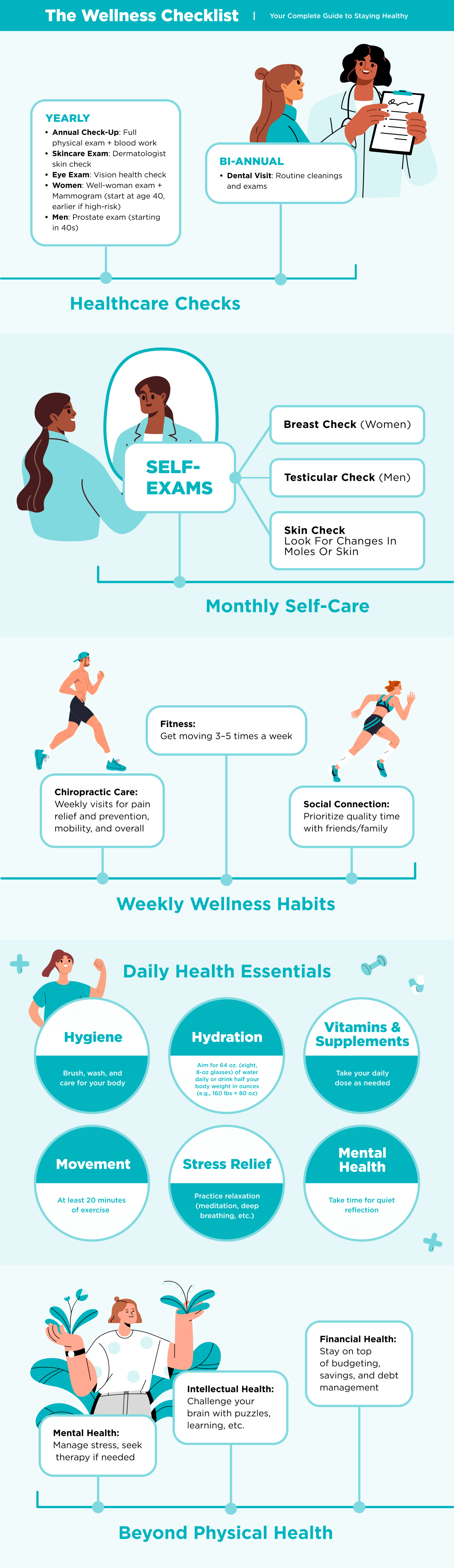
Think of this guide as your roadmap. We’ll walk through annual checkups, biannual visits, monthly self exams, weekly routines, and everyday habits that support the way you move, think, sleep, and live. You can start where you are, choose what fits, and build a year of wellness that feels realistic and sustainable for your life.
Let’s build your wellness checklist for a strong, healthy year.
First rule of wellness: Focus on feeling your best all year long
Good health is about feeling steady, energized, and supported in your everyday life. A healthy year looks like waking up with a little more ease, moving through your day with more confidence, and ending most nights feeling grounded instead of drained.
It’s not about chasing appearance goals or powering through punishing workouts. Living your healthiest year means looking at your whole life. Strong muscles and flexible joints, steady moods, meaningful relationships, and confident financial choices all play a part in how you feel. You might notice it in how easily you climb the stairs, how your favorite jeans fit, or how calm you feel when a busy week shows up.
A healthy year might mean scheduling regular therapy sessions, carving out time for family dinners, or taking short walks to reset between responsibilities. It might look like setting clear boundaries at work, creating a simple budget that supports your goals, or choosing supportive providers who can help you stay on track. It is about building a rhythm that supports you inside and out.
When you zoom out, wellness becomes whole-life and whole-body. It touches how you move, think, feel, connect with others, and show up in every part of your day. That kind of overall health and wellness is often described through the different dimensions of wellness, from physical and emotional to social and occupational. If you want to explore those in more detail, you can dive into our guide to the seven dimensions of wellness.
Annual wellness checklist: Yearly health screenings to prioritize
An annual checkup is a chance to check in, celebrate progress, and make sure your health is headed in the direction you want. Kids have growth charts and milestone trackers. As adults, yearly visits can play a similar role by giving you a clear picture of how your body is doing right now.
A yearly exam can help you catch small changes early, update your goals, and fine tune your routine with your provider’s support. Instead of focusing on what might be wrong, these visits are about staying on top of your health, protecting your energy, and setting yourself up for a strong, healthy year ahead.
Annual healthcare for everyone: General health checkups
Everyone should schedule a yearly visit with a general practitioner or their primary care provider. These checkups usually include monitoring blood pressure, heart rate, and weight, as well as screening for conditions such as diabetes, high cholesterol, or thyroid disorders. You’ll also have time to talk through any new or ongoing health concerns.
Depending on your age and health history, your doctor may recommend vaccinations such as flu, tetanus, or shingles, routine blood panels, or lifestyle adjustments. These visits are also a good time to update your family medical history and get referrals to specialists when you need them.
Annual wellness visits for women
Women should prioritize annual well woman exams starting in their late teens or early twenties. These appointments often include Pap smears to screen for cervical cancer. Pap tests are generally recommended every three years for women ages twenty one to sixty five, or every five years when combined with HPV testing.
For women ages forty to seventy four, annual or biennial mammograms are recommended to help detect breast cancer early. Those with a family history of breast or ovarian cancer, known genetic mutations such as BRCA1 or BRCA2, or other risk factors like dense breast tissue may need earlier or more frequent screenings.
Blood work to monitor hormone levels can be especially helpful during pregnancy, postpartum, perimenopause, or menopause. These tests can help address concerns like fatigue, mood swings, hot flashes, sleep changes, or irregular cycles.
Annual wellness visits for men
As men age, their healthcare needs naturally change. Prostate exams are often recommended starting at about age fifty for most men, although those with a family history of prostate cancer or African American men may need to begin closer to age forty five.
Prostate screenings usually include a PSA (Prostate Specific Antigen) blood test and sometimes a digital rectal exam. Annual blood work to measure testosterone and screen for conditions like anemia or metabolic syndrome can help detect changes that might affect energy, libido, sleep, or overall health.
Men over forty should also keep an eye on cardiovascular health with regular lipid panels and blood pressure checks. These tests help monitor risk for heart disease and make it easier to adjust lifestyle or treatment plans before problems grow.
Annual skin checks: Dermatology and skin cancer screening
Skin health is easy to overlook, but yearly visits to a dermatologist can be lifesaving. Starting in your twenties, it’s smart to schedule an annual skin exam to keep an eye on moles, freckles, or any other skin changes.
If you have a personal or family history of skin cancer, fair skin, frequent sun exposure, or you tend to burn easily, you may need biannual or even quarterly visits. During a skin exam, the dermatologist looks for early signs of melanoma and non melanoma skin cancers and may recommend preventive steps like using a broad spectrum sunscreen with SPF 30 or higher and limiting midday sun exposure.
Monthly self exams help you stay aware of new or changing spots between appointments and make it easier to catch potential issues early.
Annual eye exams: Vision and eye health
Eye health deserves more attention than it often gets. Starting at about age forty, adults should have a comprehensive dilated eye exam every two years to screen for conditions such as glaucoma, macular degeneration, and cataracts. By age sixty, yearly exams are often recommended.
If you have diabetes, high blood pressure, or a family history of eye disease, you may need annual eye exams earlier, since these conditions can speed up vision changes.
During a visit, your eye doctor checks for refractive errors like nearsightedness or farsightedness and updates your prescription if needed. You can also keep an eye on your vision at home using apps or charts to monitor blurriness, blind spots, or color changes, and then bring anything concerning to your eye doctor’s attention.
Think of annual checkups as your personal wellness inventory. They give you time to reflect, adjust, and plan. Yearly healthcare checks help you maintain a basic sense of wellness, screen for disease, and address issues in a timely way. If staying on top of your health feels overwhelming, yearly visits are a manageable and powerful place to start.
Biannual checkups: Twice a year visits to stay ahead
Some parts of your health benefit from a little more attention. Semiannual visits strike a balance between the once a year check in and your day to day habits.
Dental health is one of the best examples. Seeing the dentist every six months does much more than prevent cavities. Routine cleanings remove plaque and tartar that regular brushing and flossing can’t fully handle, which helps prevent gum disease. Gum disease has been linked to heart disease, diabetes, and pregnancy complications, so it’s worth taking seriously.
These visits also give your dentist a chance to screen for early signs of oral cancer, enamel erosion, or temporomandibular joint (TMJ) issues. If you’re prone to cavities or already have gum disease, your dentist might recommend more frequent visits for deep cleanings or specialized treatment.
Skin health may also call for more than once a year visits, especially if you have a personal or family history of skin cancer, lots of moles, or frequent sun exposure. In that case, a dermatologist might suggest seeing you every six months to monitor changes and address concerns sooner rather than later. For many people, an annual exam is enough unless new symptoms show up.
As you age or if you’re managing chronic conditions, general medical checkups may also shift to a semiannual schedule. Seeing your doctor every six months can help track blood work more closely, monitor the progression of conditions such as hypertension or diabetes, and adjust medications or treatment plans in a proactive way.
Semiannual visits to targeted specialists, whether for your teeth, skin, or a chronic condition, add another layer of proactive care and support long term well being.
Monthly wellness habits: Self exams and simple health check ins
As you get more comfortable with self care, monthly health routines can make a surprising difference in your overall well being. Monthly healthcare may sound like a big commitment, but most of these habits are simple, private, and easy to fit into your life at home.
Perform your monthly breast self exams (BSEs)
Breast self exams are a powerful habit for women of all ages. They help you get familiar with how your breasts normally look and feel so you’re more likely to notice changes early.
Here’s a simple way to approach them:
Pick the right time: Do your BSE around the same time every month. If you menstruate, aim for a few days after your period ends when your breasts are usually less tender. If you’re postmenopausal, pick a date you’ll remember, like the first of the month.
Start with a visual exam: Stand in front of a mirror with your shoulders straight and your hands on your hips. Look for changes in size, shape, or symmetry. Check for puckering, dimpling, redness, or scaling of the skin or nipple.
Do a physical exam lying down: Lie on your back with one arm behind your head. Use the pads of your three middle fingers on the opposite hand to examine the breast. Move your fingers in small circular motions and cover the entire breast from the collarbone to the bottom of your ribcage and from the armpit to the sternum. Use light, medium, and firm pressure to feel different layers of tissue.
Repeat in the shower: Many women find it easier to feel changes when the skin is wet and slippery. You can repeat the same circular motions in the shower.
If you notice any lumps, discharge, or unusual changes, don’t panic. Many changes aren’t cancerous. Still, it’s important to schedule a visit with your healthcare provider so they can check things out.
Perform your monthly testicular self exams (TSEs)
For men, monthly testicular self exams are an important habit, especially between the ages of fifteen and thirty five when the risk of testicular cancer is higher. A quick monthly check can help you spot changes early.
Try this approach:
Choose the right moment: The best time is during or right after a warm bath or shower when the scrotal skin is relaxed.
Inspect visually: Stand in front of a mirror and look for any swelling or changes in the size or shape of your testicles.
Feel each testicle: Gently roll each testicle between your thumb and fingers using both hands. It’s normal for one testicle to be slightly larger or hang lower than the other. You’re looking for lumps, areas of hardness, or changes in texture.
Locate the epididymis: This is the soft, tube-like structure at the back of each testicle that stores and carries sperm. Once you know what it feels like, you’re less likely to mistake it for something abnormal.
If you notice swelling, a lump, or discomfort that feels new or different, contact a healthcare professional and get it evaluated.
Monthly skin checks at home
We’ve already talked about yearly visits to a dermatologist, but monthly at home skin checks help you catch potential issues sooner.
Here’s how to do them:
- Use good lighting and stand in a well lit room.
- Use a full length mirror and a handheld mirror to see harder to reach places.
- Check your entire body from head to toe, including your scalp, behind your ears, between your toes, and under your nails
- Look for new moles or growths and changes in the size, shape, or color of existing moles. Watch for sores that don’t heal.
To help remember what to look for, use the ABCDE rule:
A: Asymmetry – One half doesn’t match the other.
B: Border – Edges look irregular, blurred, or jagged.
C: Color – Colors vary within the same spot, including shades of brown, black, red, white, or blue.
D: Diameter – Larger than a pencil eraser, about six millimeters.
E: Evolving – Any change in size, shape, color, or sensation over time.
If something looks suspicious or just feels off, schedule a dermatologist appointment for a professional exam.
Other, lesser-known monthly wellness check ins
Track fitness progress: A monthly check in with a personal trainer can help you measure changes in strength, flexibility, or endurance. They can also help you adjust your workouts as your goals change.
Plan with a nutritionist: A monthly session with a nutritionist or dietitian can help you review your eating habits, plan meals, and track how changes in your diet affect your energy, digestion, or overall health.
Assess mental health: Set aside time once a month to check in with yourself emotionally. You might journal about how you’ve been feeling, review your stress levels, or schedule a session with a therapist or counselor.
Monthly self care routines are about staying proactive. By weaving these habits into your life, you’re investing in a healthier, more confident future.
Weekly wellness habits: Simple routines that support long-term health
Weekly healthcare habits can create powerful, lasting benefits when you stick with them. You don’t need huge blocks of time. A few consistent weekly routines can help support your physical, mental, and emotional health and keep you moving toward long term vitality.
Weekly weight check ins: Information, not obsession
Tracking your weight once a week can give you useful information about your body’s trends without getting lost in day to day ups and downs.
How to monitor: Step on the scale at the same time each week, preferably in the morning before you eat.
What to expect: Normal fluctuations happen due to hydration, hormone cycles, sleep, and stress. Instead of focusing on single numbers, look for overall trends over time.
Remember, the scale is only one data point. It’s also important to notice how you feel day to day, how your clothes fit, how you breathe during activity, and how your workouts are progressing. When you look at the full picture, you get a more honest view of your health.
Weekly social connection: Emotional health and community
Spending time with people you care about isn’t just good for your mood. It’s essential for your health. Strong social connections are linked to lower rates of depression, improved immune function, and even longer life expectancy.
Weekly commitment: Try to see friends or family in person at least once a week.
What to do: Share a meal, go for a walk, attend a class together, or just sit and talk. Physical touch like hugging can release oxytocin, a hormone that reduces stress and supports bonding.
Digital boundaries: Put your phone away or limit screens during these moments. Face to face interactions often have a much bigger impact than virtual ones.
Weekly exercise classes: Movement, momentum, and motivation
Exercise is a cornerstone of good health, and group classes add structure, accountability, and community. Attending a weekly class can boost your fitness, improve your mood, and give you something positive to look forward to.
Why it helps: Consistent exercise can reduce your risk for chronic conditions such as heart disease, diabetes, and osteoporosis. It also supports mental health, improves sleep, and helps manage stress.
Options to try:
- Yoga for flexibility, balance, and mindfulness
- Zumba or dance fitness for cardio and fun
- Strength or resistance training to build muscle and protect bone density
Choose something you genuinely enjoy. When you like what you’re doing, it’s much easier to stay consistent.
Weekly chiropractic care: Supporting spinal and nervous system health
A weekly chiropractic adjustment may offer benefits that go beyond simple pain relief. Aligning the spine supports healthy nervous system function, which affects how your brain and body communicate.
Chiropractic care often follows a natural progression that includes a relief phase, a recovery phase, and an ongoing wellness phase. In the relief phase, visits may be more frequent for a short period as your chiropractor focuses on helping you feel more comfortable and calming irritated joints and tissues. As you move into recovery and then into wellness, weekly adjustments often offer the strongest benefits for many people. Weekly care can help you maintain momentum, support healthier movement patterns, and protect the progress you have already made.
Why weekly adjustments may help
Chiropractic care may help improve mobility, reduce inflammation, and support athletic performance. Many chiropractic patients say they notice better sleep, reduced stress, and more energy when they keep up with regular care, especially in the early stages of their plan.
The science connection
Your spine protects the spinal cord, which carries messages between your brain and the rest of your body. When your spine moves well and stays aligned, it may help this communication work more efficiently. That is one reason many people choose to include chiropractic care as a regular part of their overall wellness plan.
Who might benefit
Chiropractic care can support people at many stages of life and many stages of their health journey. You might be an athlete pushing your limits, someone with a desk job who feels stiff and sore, or a busy parent managing everyday aches and pains. You might be looking for relief, working on recovery, or focusing on long term wellness. Chiropractic care is not one size fits all. Your chiropractor can talk with you about your goals, your health history, and which stage of care makes the most sense right now, then create an approach that fits your body, your schedule, and your lifestyle.
Why weekly consistency matters
Weekly healthcare habits don’t have to be expensive or complicated. They just need to be consistent. Over time, small intentional steps add up to real change. Think of these routines as weekly deposits into your future health.
Daily healthy habits: The details that create big change
Here’s the truth. The small things you do every day shape your health more than almost anything else. It’s harder to see the results in the short term, but daily habits build the foundation for how you’ll feel months and years from now.
What you do on a regular basis, no matter how simple, adds up. The good news is that building a solid routine often starts with a few small shifts.
Daily hygiene habits
From brushing your teeth to washing your hands, the hygiene habits you learned as a kid still matter just as much now. Brushing and flossing twice a day, washing your hands regularly, and taking basic care of your skin and hair are simple forms of daily maintenance.
These small tasks protect you from illness, help prevent dental problems, and support your overall health and confidence.
Daily hydration
Staying hydrated is one of the easiest ways to support your body every day. Aim to drink at least eight eight ounce glasses of water a day, or about sixty four total ounces. Another simple approach is to drink about half your body weight in ounces of water. For example, if you weigh one hundred sixty pounds, a daily goal of about eighty ounces of water may work well. Proper hydration supports digestion, joint health, circulation, energy, and focus. It’s a simple habit that can make a noticeable difference in how you feel.
Daily vitamins and supplements
The right vitamins and supplements can help fill nutritional gaps and support everyday health. Food should always be your foundation, but supplements can add a helpful layer when they’re used thoughtfully.
For example, vitamin D may support immune health and bone health. Magnesium plays a role in muscle function, relaxation, and sleep. Omega 3 fatty acids can support heart and brain health. Supplements that include ingredients such as glucosamine, chondroitin, collagen, or turmeric may help support joint comfort and mobility. A high quality multivitamin may help cover smaller gaps in your diet.
It’s important to choose trusted brands and talk with a healthcare provider before starting or changing supplements. Not every product is right for every person, and more isn’t always better. The goal is to find what works for your body and build a routine you can stick with, whether that’s pills, liquids, or powdered shakes.
Daily quiet time for mental health
Your brain needs quiet time just as much as your body needs rest. In a loud, busy world, moments of stillness are a form of care.
Meditation, prayer, deep breathing, or even sitting quietly with a cup of tea can help you reset. These small pauses can calm your nervous system, support emotional balance, and help you show up more present and focused during the day.
Daily movement
Daily movement is essential, not optional. That doesn’t mean you need an intense workout every single day. It means you keep your body moving regularly in ways that feel sustainable.
You might:
- Take a brisk walk around the block
- Stretch for ten to twenty minutes
- Follow a short yoga or mobility video
- Stand up and move every hour if you work at a desk
Daily movement supports flexibility, healthy weight management, and joint health. It can also ease some types of chronic pain and give you more energy over time. Even twenty minutes a day can create meaningful change when you stay consistent.
Daily stress relief
Stress shows up in many forms, and it’s impossible to avoid it completely. The key is to learn how to manage it before it starts to manage you.
You might:
- Set boundaries with work and avoid checking email late into the night
- Build a simple budget and savings plan to cut financial stress
- Practice hobbies that help you unwind
- Spend time with people who leave you feeling supported instead of drained
The less stress you carry, the more space your body and mind have to feel well. Stress relief works best when it becomes a daily habit instead of something you only focus on when you feel overwhelmed.
By focusing on small daily habits, you can create a big impact on your long term health and happiness. It’s not about grand gestures. It’s about consistent, everyday choices that build the life you want.
Wellness beyond the body: Mental, intellectual, and financial health
When we think about health, we often picture physical strength or a strong heart. But your mind and your money are important parts of wellness too. Mental clarity and financial peace can feel just as life changing as a pain free back or a strong immune system.
Mental and intellectual wellness
Mental health isn’t only about feeling good today. It’s about giving your mind tools and space to stay resilient over the long haul. Just like muscles need workouts, your brain needs regular challenges and chances to unwind.
Journaling: Let’s face it, life gets busy, and sometimes it’s hard to keep up. That’s where journaling comes in. Taking a few minutes each day to write down your thoughts can be incredibly powerful. It doesn’t need to be a long, structured essay—sometimes, just getting your worries out on paper can clear up mental fog and make your emotions easier to manage. Studies have shown that journaling can help reduce stress, enhance self-reflection, and improve mood. So, whether it’s a bullet-point list of things to be grateful for or a full-on diary entry, it’s an easy practice to add to your daily habits.
Games and puzzles: Cognitive health is often overlooked, but brain games are a simple way to keep your mind active and engaged. Whether it's a crossword puzzle in the morning or a Sudoku challenge during your lunch break, these mental exercises are just as important as physical ones. Fun fact: Studies suggest that regularly challenging your brain with puzzles can help maintain your cognitive function as you age, and it’s a great way to wind down after a busy day.
Healthy hobbies: Remember when you were a kid and learning something new seemed exciting? It turns out that still applies as we get older. Whether picking up a new instrument, exploring photography, or diving into a podcast about history, hobbies that stimulate your mind can have lasting benefits. Learning something new keeps you sharp and gives you a sense of accomplishment. Plus, it’s a great way to escape the stresses of everyday life and spend time doing something just for you.
Financial wellness and everyday money habits
Financial health might not be the first thing that comes to mind when you think of wellness, but money stress can affect sleep, relationships, and even physical health. The goal isn’t to have a certain amount in the bank. It’s to feel more in control of your finances and your future.
Budgeting basics
A realistic budget is one of the most powerful tools you can use. It helps you understand where your money goes, set limits, and make adjustments before you feel squeezed. A good budget doesn’t just restrict you. It gives you clarity. When you know what you’re spending and saving, it’s easier to plan for trips, special purchases, emergencies, or long term goals.
Saving and investing over time
Setting aside even a small percentage of your income each month can make a big difference over time. Automating your savings can help you stay consistent without having to think about it constantly.
Investing for the long term, whether through retirement accounts or other options, can also support your future. You might start with an emergency fund, then move on to retirement savings, college funds, or other goals. Being proactive with your money now can help lower financial stress later.
Financial planning check ins
Financial planning can be a powerful way to support your overall wellness and give you more confidence about the future. It often works best when you break it into small, realistic steps, such as:
- Paying down high interest debt
- Setting up or increasing retirement contributions
- Saving for a specific life event or goal
- Meeting with a financial professional when you want guidance
Regular check-ins, even once or twice a year, can help you adjust your plan as your life changes so you keep moving in the direction you want.
By caring for your money with simple, consistent practices, you build a foundation for a healthy, happy, and secure future. Strong mental habits and solid financial habits work together to support the rest of your wellness goals.
Take charge of your health with purposeful wellness
Taking care of your health isn’t about a single decision or a thirty day challenge. It’s about building a proactive lifestyle that supports you throughout the year.
Each habit you choose, from journaling for mental clarity, to budgeting for financial peace, to committing to regular chiropractic care or annual screenings, adds up over time. Together, they create a life that feels more grounded, energized, and intentional. Living a life of purposeful wellness means recognizing that every choice, big or small, can shape your future. It’s about making the time, setting clear intentions, and staying consistent.
Your health isn’t a one time fix. It’s a journey.
The habits you start today become the foundation for a stronger, more resilient tomorrow. Take these actions to heart, one step at a time, and let them guide you toward a healthier, more vibrant, and more confident life all year long.
The information, including but not limited to text, graphics, images, and other material contained on this page, is for informational purposes only. The purpose of this post is to promote broad consumer understanding and knowledge of various health topics, including but not limited to the benefits of chiropractic care, exercise, and nutrition. It is not intended to provide or be a substitute for professional medical advice, diagnosis, or treatment. Always seek the advice of your chiropractor, physician, or other qualified health care provider with any questions you may have regarding a medical condition or treatment and before undertaking a new health care regimen, and never disregard professional medical advice or delay in seeking it because of something you have read on this page.